
Zen Idle: Gravity Meditation
Tech Tree GamesSimulation
4.24.39K Reviews
- Version
- 2.1.11
- Installs
- 1.00M
- Age Rating
- Everyone
Screenshots
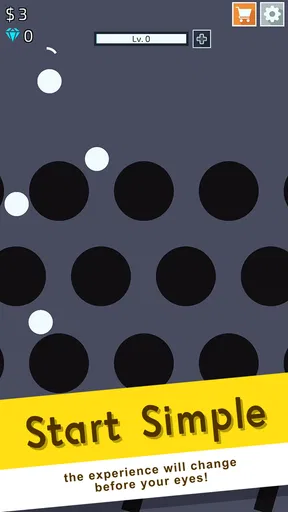
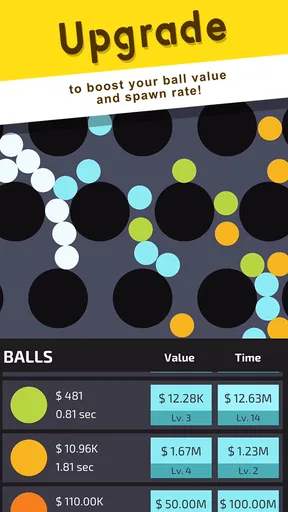

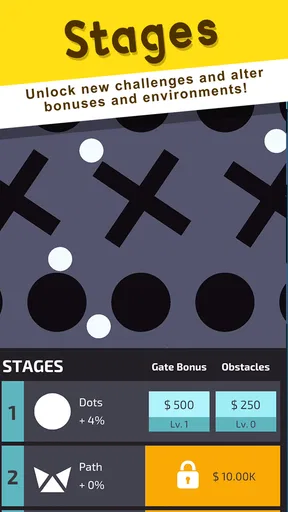
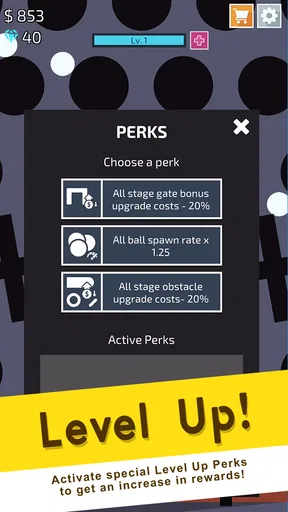
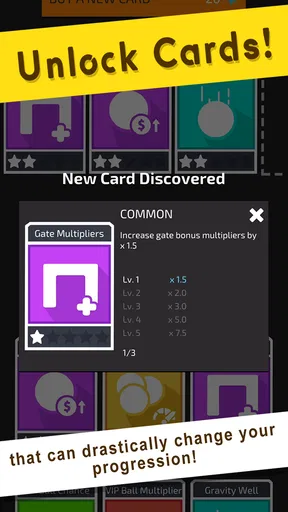
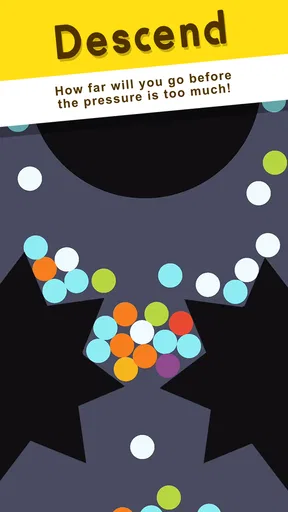
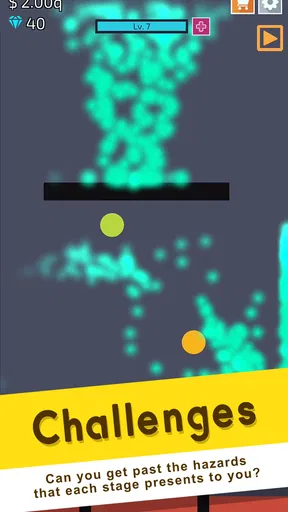
Our Review of Zen Idle: Gravity Meditation
 Analysis by Appyee
I spent time with Zen Idle: Gravity Meditation expecting a simple way to fill a few spare minutes, and that is exactly where it makes the most sense. This is a simulation game from Tech Tree Games built around watching balls move through a gravity-driven setup while progress continues at an intentionally unhurried pace. It is free to start, rated for Everyone, and its appeal comes less from complex controls than from the small satisfaction of seeing a system gradually become more productive.
That simplicity is both its strongest quality and its main limitation. I found it easy to open during a short break, check what had happened, make a small adjustment, and leave again. I did not need to memorize a story, learn a large control scheme, or commit to a long session. At the same time, anyone looking for constant action, deep narrative, or a competitive multiplayer experience may find the rhythm too passive.
What the gravity-based loop feels like in practice
The central idea is deliberately calm: balls tumble, interact with the play area, and turn that movement into the kind of gradual progress associated with an idle game. The visual motion gives me something to watch, but the real activity is deciding when to check in and how much attention to give the next improvement. It is closer to tending a small digital machine than playing a traditional arcade game.
That makes the first few sessions unusually approachable. I can understand the basic purpose almost immediately, and the game does not ask me to become an expert before it becomes enjoyable. The lack of urgency also changes how I judge mistakes. If I make a less-than-perfect choice, the experience does not feel ruined in the way a failed run might in a roguelike or a missed objective might in a strategy game.
My favorite use case is a fragmented day. I might open it while waiting for a kettle, during a short commute break, or after finishing a task that needs a mental reset. The balls provide gentle visual movement, while the idle structure means I am not punished for putting the phone down. That combination is more useful than it sounds: many mobile games claim to be relaxing but still demand frequent taps, quick reactions, or constant event tracking.
There is also a practical distinction between watching and actively playing. If I want something to occupy my hands, this may feel too quiet. If I want a low-pressure game that can sit beside a podcast, television show, or work break, the restrained design works much better. I would not recommend it as a replacement for a focused puzzle session, but I would recommend trying it as a background game.
Why the slow pace can be satisfying
The slow pace gives each return a clear purpose. I am not opening the game because I need to win a match before a timer expires. I am checking whether the setup has generated enough progress to justify the next step. That creates a modest but reliable feedback loop: leave, return, inspect, improve, and leave again.
A useful habit is to decide what kind of session I am having before touching anything. In a quick check-in, I simply collect progress and make the most obvious improvement. In a longer session, I watch the movement for a while and compare how different choices affect the flow. Treating those as separate modes prevents me from expecting a short visit to deliver the same satisfaction as a longer one.
The game also benefits from being visually readable. The falling balls are not just decoration; they make the idea of gravity understandable without a lengthy explanation. I can see when movement is smooth, when a section feels congested, and when a change appears to improve the overall flow. That visual feedback is more satisfying than a menu full of numbers alone.
Where progress starts to feel like waiting
The same idle structure can become repetitive once the novelty of watching the system has faded. There are stretches where the most meaningful action is simply returning later. For players who enjoy frequent decisions, that can feel less like meditation and more like waiting for a resource bar to become useful.
I also noticed that the game’s calmness depends on my expectations. If I open it hoping for a new challenge every few minutes, I am likely to be disappointed. If I treat it as a slow-building simulation, the pauses feel intentional. This is not a minor distinction; it determines whether the game feels relaxing or underactive.
My advice is to avoid forcing long sessions. The experience works best when I let the idle loop do its job rather than trying to extract constant entertainment from it. A few minutes of observation followed by a later return is more enjoyable than staring at the same process until it becomes background noise.
Spending, pressure, and the question of fairness
The game is free to download and play, with optional in-app purchases listed from $4.99 to $99.99 per item. That range is important context for anyone deciding whether to try it. I can begin without paying, but the presence of higher-priced purchase options means players should approach the shop deliberately rather than assuming every offer is a small, casual add-on.
I prefer to judge a free idle game by asking whether the basic loop remains worthwhile without spending. Here, the answer depends heavily on how patient I am. The design naturally makes time part of the progression, so a player who enjoys gradual growth may be perfectly comfortable staying free. Someone who dislikes waiting in any form may feel pressure to speed things up, even if the game does not require an immediate purchase.
That is the key spending trade-off: money may feel attractive because idle games are built around delayed rewards, but the whole point of this one is the delay. I would not spend simply because progress is slow. I would first decide whether I actually enjoy watching the system develop. If the basic loop does not hold my attention, a purchase would not fix the underlying mismatch.
I also recommend treating the largest purchase tier with particular caution. A high-priced option can be reasonable for a committed player who has already spent substantial time with the game, but it is difficult to justify during the first few sessions. Starting free gives me enough time to learn whether the gravity-based presentation is genuinely relaxing or merely interesting for a short while.
How much pressure does the game create?
The pressure is mostly psychological rather than reflex-based. Because progress is associated with returning and improving, I can start feeling that I should check in frequently. I found it healthier to set my own rhythm instead of allowing the game to dictate one. Checking once or twice at natural points in the day keeps the experience light; repeatedly opening it just to avoid feeling behind makes it less relaxing.
This is one of the less obvious lessons of idle games: the absence of active play does not automatically mean the absence of pressure. A game can be mechanically gentle while still encouraging habitual checking. Zen Idle works best when I use its idle nature as permission to put the phone down, not as a reason to monitor it constantly.
For families, the Everyone rating makes the game broadly approachable, but I would still explain the purchase system before handing over a device linked to a payment method. The age rating describes the intended content level, not a promise that every purchase decision will be obvious to a child. A quick conversation about asking before buying is sensible.
Fairness compared with other idle games
Compared with clicker games, this feels less dependent on rapid tapping and more focused on observing a physical-looking process. Compared with management simulators, it is lighter on planning and easier to understand. Compared with action games, it offers almost no pressure to react quickly. Those differences make it fairer for players who dislike speed-based competition, but they also mean it may feel shallow to someone who wants layered systems.
Its fairness is strongest when I judge it as a personal progression game rather than a contest. I am not measuring my reflexes against another player in the moment. My satisfaction comes from improving my own setup and returning to see the result. That removes one common source of frustration: losing because another person has more time, faster reactions, or a stronger team.
Still, fairness is not the same as generosity. An idle game can be fair while asking for patience, and patience is a real cost. Players with limited time may prefer a compact puzzle game that delivers a complete challenge in one sitting. Players who enjoy long-term accumulation may see that same waiting as part of the appeal.
What I would want to understand before spending
I would make any purchase only after answering three practical questions for myself. First, do I enjoy the visual motion even when I am not actively changing anything? Second, does the free progression already feel satisfying? Third, am I buying because I want to support a game I use, or because I feel impatient with its pace?
Those questions matter more here than chasing an ideal upgrade path. The game’s value is personal and cumulative. If I like the atmosphere and return naturally, optional spending can be considered later. If I am opening it only to accelerate a wait that I never enjoyed, paying is unlikely to create a better experience.
Technical context and everyday usability
The current version is 2.1.11, and the game runs on Android 7.0 or newer. That makes it accessible to people using older Android devices, although actual comfort will still depend on the phone’s screen, performance, and battery condition. Because the experience is visually centered, a small or dim display may make the falling motion less pleasant to watch than it is on a larger screen.
The game has built a substantial audience, with over one million installs, an average rating of 4.2, around forty-four thousand ratings, and roughly four thousand four hundred written reviews. Those figures suggest that the concept has found a real audience, but they do not remove the need to decide whether its slow rhythm suits me personally. Popularity can confirm that the idea is understandable; it cannot guarantee that I will enjoy waiting for it.
I found it most comfortable when used in short portrait-oriented checks rather than as a game demanding full attention. That makes it a good companion for quiet moments, but it also means the experience can become easy to ignore. If I want a game that keeps me engaged without interruption, I would choose something with active objectives instead.
One useful workflow is to separate observation from optimization. During the first part of a session, I watch how the balls move without immediately changing everything. Then I make one meaningful adjustment and observe again. Changing too many things at once makes it harder to understand what helped, while a single change gives the visual system a clearer cause-and-effect relationship.
Another practical tip is to judge improvements over more than one visit. Idle progress can make a change look successful simply because time passed afterward. Returning later and comparing the overall flow gives me a better impression than reacting to one brief burst of movement. This approach keeps the game from turning into random menu tapping.
Who should try it, and who should skip it?
I think it is a strong fit for players who enjoy incremental progress, soothing motion, and games that respect interruptions. It is especially suitable for someone who wants a low-commitment Android simulation with a clear visual identity and no demand for fast reactions. It can also work for people who like watching systems evolve without needing a detailed story.
I would skip it if I need a strong sense of completion in every session. I would also look elsewhere if I want complex resource chains, competitive rankings, character development, or a campaign with a clear ending. The game’s appeal comes from continuation, so players who prefer a defined finish line may find the open-ended structure unsatisfying.
It is not my first choice for children who are likely to tap through purchase screens without supervision, even though the content rating is Everyone. Nor would I recommend it to someone who already knows that idle mechanics make them check their phone compulsively. A relaxing presentation does not guarantee relaxing habits.
My trust verdict after living with the loop
Zen Idle: Gravity Meditation succeeds because it understands that a game can be enjoyable without demanding constant input. The falling balls give the idle mechanics a visible, almost tactile quality, and the free entry point makes it easy to test the idea before making any commitment. I appreciate that the game can fit around real life instead of requiring real life to fit around it.
My reservation is equally clear: the experience asks me to value waiting. If I do not find gradual progress satisfying, the quiet presentation quickly becomes repetitive. The optional purchase range also means I would approach the shop carefully, especially at the higher end, and I would never spend before deciding that the free loop already works for me.
For me, the best way to play is modestly: open it during natural breaks, observe the movement, make one considered change, and leave before the calm turns into boredom. That routine lets the game’s strongest quality remain visible. It is not a substitute for a deep simulation or an energetic challenge, but it is a convincing choice for anyone who wants a gentle gravity-based idle game with progress that unfolds at its own pace.
Tech Tree Games has made something approachable rather than demanding. With more than a million installs and a 4.2 average from around forty-four thousand ratings, it is clearly not an obscure experiment, yet the final decision still comes down to temperament. If you enjoy quiet systems, delayed rewards, and checking in without pressure, I think it is worth trying for free. If you need constant decisions or a firm endpoint, another type of simulation will serve you better.
Verdict
Strengths of Zen Idle: Gravity Meditation
- Simple one-handed gameplay that is easy to learn and play casually.
- Relaxing visuals and sound design create a calm, low-pressure experience.
- Offline play makes it suitable for short sessions without an internet connection.
- Progress continues through idle rewards, even when you are not actively playing.
- Frequent ball and upgrade choices add variety to the otherwise simple mechanics.
Limitations of Zen Idle: Gravity Meditation
- Progress can feel slow unless you regularly return to collect and upgrade rewards.
- The core gameplay may become repetitive after extended play sessions.
- Several upgrades and bonuses are tied to optional in-app purchases.
- Advertising can interrupt the experience or be used to speed up progress.
- Limited interaction may disappoint players looking for a more active game.
Other Releases by Tech Tree Games
View All
The Tower - Idle Tower Defense
Simulation4.0

Idle Planet Miner
Simulation4.4
Similar Picks in This Category
View All
Truckers of Europe 3
Wanda Software4.3

Town Building Life Simulator
XGame Global4.2

Fidget Toys Trading・Pop It 3D
Freeplay Inc4.7

Sculpt People
CrazyLabs LTD4.4

Scary Teacher 3D
Z & K Games4.2

Hair Tattoo: Barber Shop Game
CASUAL AZUR GAMES4.3
Frequently Asked Questions
What is Zen Idle: Gravity Meditation, and how does the gameplay work?
Zen Idle: Gravity Meditation is a relaxing idle game built around gravity, bouncing balls, and gradual progression. You place or upgrade objects that guide balls through different paths, earning rewards as they move. The game continues generating progress even when you are away, while offline earnings let you return later and collect accumulated resources. Its simple mechanics make it easy to start, although deeper upgrades add more strategy over time.
Is Zen Idle: Gravity Meditation free to download and play?
Yes, Zen Idle: Gravity Meditation can generally be downloaded and played without an upfront purchase. However, like many idle mobile games, it may include optional in-app purchases for currency, boosts, ad removal, or faster progression. You can usually advance without spending money, but progress may feel slower at certain stages. Check the store listing on your device for the current pricing, available purchases, and regional differences.
Does the game require an internet connection to play?
Zen Idle: Gravity Meditation is primarily designed as a casual idle experience, so many of its basic features can often be used without a constant internet connection. Nevertheless, an internet connection may be required for advertisements, cloud-related features, purchases, updates, event content, or restoring progress. If you play offline, some rewards or online services may not be available until the game reconnects.
Are advertisements necessary in Zen Idle: Gravity Meditation?
Advertisements may appear as part of the free-to-play experience, particularly when claiming optional bonuses, multiplying offline earnings, or receiving temporary boosts. In many cases, watching an advertisement is voluntary rather than required for every action, but frequent players may encounter them regularly. The game may also offer an in-app purchase to reduce or remove advertising, depending on the version available in your region.
Is Zen Idle: Gravity Meditation suitable for children and casual players?
The game is generally approachable for casual players because it uses simple controls, calming visual feedback, and an easy-to-understand upgrade system. It does not demand fast reactions or long uninterrupted sessions, making it suitable for short play periods. Parents should still review the age rating, advertising settings, and in-app purchase options, since store classifications and monetization features can vary between Android and iOS.
Play our best games!


